

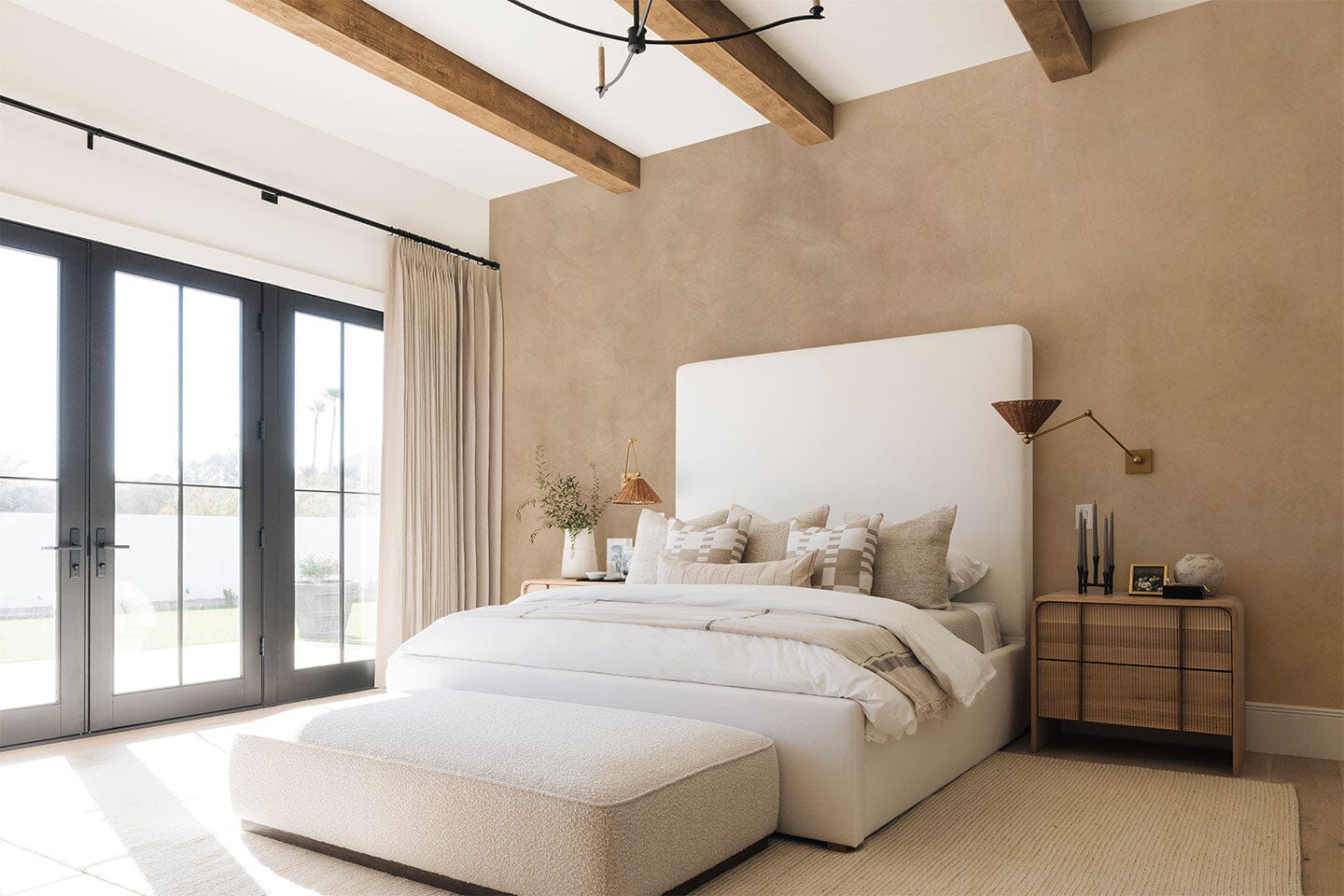
Sometimes the best rooms aren't the ones with the most going on.
A beautiful space can feel completely finished with a subtle pattern, a soft neutral colour, or a little bit of texture on the walls.
That's where minimalist wallpaper comes in.
Minimalist wallpaper doesn't have to mean plain white walls or a completely pattern-free room. It can mean soft botanical prints, understated geometric patterns, delicate textures, or neutral designs that add interest without taking over the space.
And with peel and stick wallpaper, creating that look doesn't necessarily require a professional installer.
Whether you're updating a bedroom, bathroom, home office, nursery, or a single accent wall, the right wallpaper can completely change how a room feels.
Here are five of our favourite ways to use simple, minimalist wallpaper, followed by everything you need to know before installing it.

1. Soft Neutral Wallpaper
If you're decorating a room that already has furniture and accessories you love, neutral wallpaper can be the perfect finishing touch.
Look for designs in shades of:
- Warm white
- Cream
- Beige
- Taupe
- Soft grey
- Sandy neutrals
The goal isn't to make the wallpaper disappear. It's to give the room another layer without competing with everything else.
Neutral wallpaper works particularly well in bedrooms, living rooms, entryways, and home offices.

2. Subtle Geometric Wallpaper
Minimalist doesn't have to mean floral.
A simple geometric pattern can add structure and visual interest while still keeping the room calm.
Try a small-scale geometric design behind:
- A desk
- A bed
- A dining area
- A console table
- Open shelving
This is especially effective when the wallpaper uses a limited colour palette.
The pattern creates interest, while the restrained colours keep the overall room feeling collected.

3. Botanical Wallpaper With a Minimal Feel
Botanical wallpaper is one of the easiest ways to bring an organic feeling into a room.
But if a full, dramatic floral pattern isn't your style, look for botanical designs with:
- Fine lines
- Muted colours
- Plenty of negative space
- Smaller-scale foliage
- Neutral backgrounds
The result is a room that feels connected to nature without looking overly decorated.

4. Use Wallpaper on One Feature Wall
You don't have to wallpaper every wall.
In fact, one of our favourite ways to use wallpaper is to create a feature wall.
A single wallpapered wall can establish the focal point of a room while allowing the remaining walls to stay simple.
Try a feature wall:
- Behind a bed
- Behind a desk
- Behind a sofa
- In a dining nook
- Behind a bathroom vanity
- In an entryway
This is also a great option if you're nervous about committing to wallpaper throughout an entire room.

5. Choose Texture Instead of Pattern
If you love minimalist interiors but still want your walls to have dimension, consider a wallpaper design that creates the appearance of texture.
Textured or textural-looking wallpaper can add warmth without introducing a strong pattern.
And if your walls themselves have texture, Urbanwalls offers a Textured Wall material specifically designed for textured surfaces. The current material has a canvas finish and is designed for surfaces such as orange peel, knockdown, and skip-trowel textures.

How to Choose the Right Wallpaper for Your Room
Before you fall in love with a design, think about the room you're decorating.
Consider the size of the room
Large patterns can make a dramatic statement, while smaller patterns tend to feel more subtle.
Consider your existing décor
Look at the colours already present in your furniture, flooring, artwork, and textiles.
Your wallpaper doesn't have to match everything exactly. It simply needs to work with the overall palette.
Think about the amount of pattern you want
If you already have patterned furniture or accessories, a quieter wallpaper may be the better choice.
If your room is mostly neutral, wallpaper can be the element that brings the personality.
Order a sample
This is one step we don't recommend skipping.
A sample lets you see the material, pattern scale, and how the wallpaper interacts with your actual room before committing to the full wall. Urbanwalls currently offers samples across its wallpaper materials.
Which Wallpaper Material Should You Choose?
One of the most important things to consider isn't the pattern at all.
It's the wallpaper material.
Urbanwalls currently offers three wallpaper options:
Peel and Stick Wallpaper
A self-adhesive option designed for smooth, flat walls.
It's applied by peeling away the backing and smoothing the wallpaper onto the wall.
Textured Wall Wallpaper
A canvas-finish material designed specifically for textured walls.
This is the option to consider if your walls have a texture such as orange peel or knockdown.
Pre-Pasted Wallpaper
A water-activated option designed for smooth walls.
Instead of having a permanent adhesive backing, the adhesive is activated with water before installation.
Not sure which material is right for your wall? Order a sample first.

How to Install Peel and Stick Wallpaper
Ready to install?
The good news is that peel and stick wallpaper is designed to make DIY installation much more approachable.
Step 1: Prepare Your Wall
Start with a clean, dry, properly prepared surface.
For newly painted walls, Urbanwalls recommends waiting 4 to 5 weeks before installing wallpaper so the paint has had time to cure properly.
Step 2: Measure Your Wall
Measure the entire width and height of the wall.
Always measure the tallest point of the wall and round up rather than ordering based on the shortest section.
And don't forget to account for doors and windows when determining the total wall area.
Urbanwalls' current wallpaper system uses 23-inch-wide panels for Peel & Stick and Pre-Pasted materials and 21-inch-wide panels for the Textured Wall option. The site's wallpaper calculator can be used to determine the quantity needed.
Step 3: Start With the First Panel
Take your time with the first panel.
This is the foundation for everything that follows.
Peel back a manageable section of the backing and begin applying the wallpaper from the top, smoothing as you work your way down.
Don't try to expose the entire adhesive surface at once.
Step 4: Smooth as You Go
Use a wallpaper smoothing tool to work out air bubbles as you apply the panel.
Working gradually gives you much more control than trying to stick the entire panel at once.
Step 5: Match Your Panels
Continue across the wall, carefully following the pattern from one panel to the next.
For Urbanwalls' current wallpaper products, the seam style depends on the material. Peel & Stick uses a ½-inch overlap, while Textured Wall and Pre-Pasted use a butted joint.
Step 6: Trim the Excess
Once the wallpaper is installed, use a sharp blade to carefully trim excess material around ceilings, baseboards, windows, and other edges.
Take your time.
The final details can make a DIY installation look polished and professional.
Can Peel and Stick Wallpaper Be Removed?
Yes.
Urbanwalls' current Peel & Stick and Textured Wall materials are designed to remove cleanly from properly prepared painted walls. However, the wallpaper is intended for single use and cannot be guaranteed to re-adhere after removal.
This makes peel and stick wallpaper particularly appealing when you want to change your space without committing to a permanent wall treatment.

Where Can You Use Minimalist Wallpaper?
There's no need to limit wallpaper to bedrooms.
Try minimalist wallpaper in:
Bedrooms
Create a calming feature wall behind the bed.
Bathrooms
Add personality to a powder room or bathroom wall.
Home Offices
Use subtle pattern or texture to make your workspace feel more intentional.
Nurseries
Soft botanical or neutral wallpaper can create a peaceful backdrop.
Entryways
A small wallpapered area can make a strong first impression.
Dining Rooms
Use wallpaper to define a dining area and add warmth.
Minimalist Wallpaper Doesn't Have to Be Boring
The best minimalist wallpaper designs don't necessarily disappear into the room.
They simply know when to be quiet.
A subtle pattern can add depth. A botanical design can bring nature indoors. A neutral geometric can add structure. And a textured design can make a room feel warmer without adding another colour.
The key is choosing a wallpaper that works with your room rather than competing with it.
And if you're still deciding, start with a sample.
It's a small step that can make the entire design process easier.

Frequently Asked Questions About Minimalist Wallpaper
What is minimalist wallpaper?
Minimalist wallpaper typically uses restrained colours, simple patterns, subtle textures, or generous negative space to add visual interest without overwhelming a room.
Is peel and stick wallpaper easy to install?
Peel and stick wallpaper is designed for DIY installation. Applying it gradually, smoothing as you go, and taking care with the first panel can make installation much easier.
Can peel and stick wallpaper be used on textured walls?
Standard Peel & Stick wallpaper is intended for smooth, flat walls. Urbanwalls also offers a Textured Wall material designed for textured surfaces.
How long should I wait after painting before installing wallpaper?
Urbanwalls recommends waiting 4 to 5 weeks after painting before installing wallpaper.
Should I order a wallpaper sample?
Yes. A sample allows you to evaluate the material, pattern scale, and how the design works in your room before placing a full order.
Create a Calmer Space With Wallpaper
Your home doesn't need to be complicated to be beautiful.
Sometimes all it takes is one wall, one beautiful pattern, and a little creativity.
Explore Urbanwalls' current wallpaper collection to find a design that works with your space, your style, and the way you actually live.


