

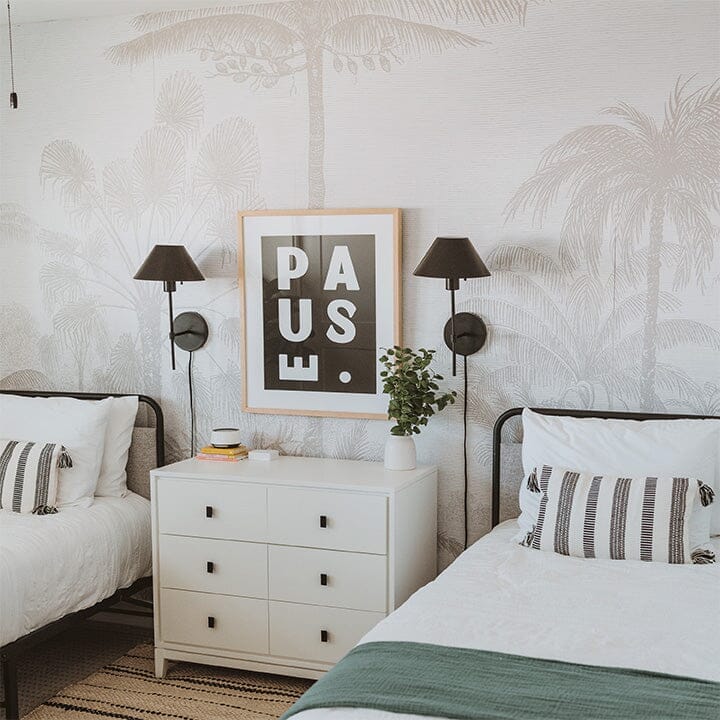

Grey has spent years being called a neutral, but that doesn’t mean it has to fade quietly into the background. Depending on the shade, pattern and colours around it, grey can feel warm and relaxed, crisp and modern, soft and romantic, or bold enough to carry an entire feature wall.
The trick is choosing the right grey. A warm grey with beige or brown undertones creates a completely different room than a cool grey with blue undertones. Then there’s charcoal, silver, greige and all those shades somewhere in between.
The best way to decorate with grey is to treat it as part of a larger colour palette rather than using it on its own. Pair grey with warm wood and cream for a softer room, black and white for stronger contrast, or muted greens, blues and blush tones when you want more colour.
If grey is already calling your name, browse our Grey Wall Decor Collection to explore grey wallpaper, wall decals and murals in one place. Urbanwalls currently offers grey designs across all three categories.
Is Grey Still a Good Colour for Interior Design?
Absolutely, but the way we use grey has changed.
Instead of covering an entire room in the same cool grey from floor to ceiling, grey works beautifully when it’s layered with warmer colours, natural materials and texture. Think grey wallpaper against a wood headboard, a charcoal floral wall paired with cream bedding, or grey wall decals against a warmer white or beige background.
Grey is particularly useful when you want something more interesting than white but still need a colour that will work with furniture and decor you already own. It can give a room depth without dictating the entire colour palette.
The important thing is to pay attention to undertones. Two greys can look almost identical on a screen and completely different once they’re in your home.

How to Choose Between Warm Grey, Cool Grey and Charcoal
Not all greys play the same role in a room. Before choosing wallpaper, decals or a mural, look at the other permanent finishes in your space, especially the flooring, countertops, tile and large furniture.
Warm Grey
Warm grey has beige, brown or sometimes slightly taupe undertones. It pairs naturally with cream, warm white, oak, walnut, camel, cognac and other earthy colours.
If you love neutral rooms but don't want everything to be beige, warm grey can give you contrast while still keeping the overall palette soft.
Cool Grey
Cooler greys can have blue, green or silver undertones. They tend to feel crisper and can work beautifully with white, black, blue and cooler wood tones.
Pay attention to lighting with these shades. A grey that looks perfectly neutral in bright daylight may appear much cooler in a north-facing room or under certain artificial lights.
Charcoal and Dark Grey
Charcoal gives grey a completely different personality. Rather than acting quietly in the background, it creates contrast and drama.
A dark grey wallpaper or mural can make a beautiful feature wall behind a bed, sofa or dining table. You don't necessarily need to use it throughout the entire room. One darker wall surrounded by lighter colours can be enough to give the space depth.
What Colours Go With Grey?
One reason grey remains so useful in decorating is that it can work with an enormous range of colours. The best combination depends on whether your grey leans warm or cool and how you want the finished room to feel.
For a warm, relaxed palette, combine grey with cream, warm white, beige, camel, chocolate brown and natural wood. If you want something more colourful, muted green, dusty blue and blush can soften grey while adding personality. Black creates stronger contrast, while brass and other warm metals can keep a grey room from feeling too cool.
If your grey room feels flat, the answer may not be another colour at all. Texture can make just as much difference. Linen, wood, woven baskets, boucle, wool and other natural materials give a neutral room layers that paint colour alone can't provide.

5 Ways to Decorate With Grey Walls
Grey can play the supporting role or become the main event. How you use it depends on how much pattern and contrast you want in the room.
1. Create a Grey Wallpaper Feature Wall
Wallpaper gives grey something that a solid painted wall doesn't have: pattern.
A grey floral can feel romantic or dramatic, while stripes can create a cleaner, more tailored look. Botanical patterns bring organic movement into the room, and more abstract designs can add texture without introducing lots of additional colour.
Urbanwalls' current Grey collection includes options such as Magnolia Blooms Wallpaper, Palm Tree Pattern Wallpaper, Country Hydrangeas Wallpaper, Silver Ficus Wallpaper and Brighton Stripes Wallpaper, giving you very different ways to use the same general colour family.
Try grey wallpaper behind a bed, bathroom vanity, dining area or desk. If the pattern is doing a lot visually, let the surrounding furniture and textiles stay a little quieter.
2. Use Grey Wall Decals for a Lighter Look
If you like grey but don't want full-wall coverage, wall decals allow you to control how much of it appears in the room.
Arrange decals farther apart to leave more of the original wall showing, or cluster them together when you want the design to make a stronger impact. This makes decals especially useful for nurseries, kids' rooms and spaces where a full wallpapered wall might feel like more than you need.
Urbanwalls currently has grey decal designs in its Grey collection, including Cityscape Wall Decals and grey options for several other designs.
3. Make a Grey Mural the Artwork
A mural works differently from repeating wallpaper. Instead of a pattern continuing across the wall, the entire wall becomes one larger composition.
This is a great approach when you have a large blank wall and don't necessarily want to fill it with framed art afterward. Urbanwalls currently offers several grey murals, including Painted World Map, Vintage Wildflower, Sketched Florals and Lighthouse, among others.
Keep the furniture around a detailed mural relatively simple and let the wall become the focal point.
4. Warm Up Grey With Natural Materials
If there's one thing that can completely change a grey room, it's warmth.
Pair grey walls with oak or walnut furniture, cream upholstery, woven baskets, linen curtains and warm lighting. Add camel, cognac or chocolate brown if the room needs a little more depth.
This is particularly helpful if you already have cool grey flooring or furniture that isn't going anywhere. Rather than adding more cool tones, use the rest of the room to create balance.
5. Use Grey as the Neutral Behind Colour
Grey doesn't have to be the only colour in a grey room.
It can actually make a beautiful backdrop for stronger colours because it gives them somewhere quiet to land. Try adding muted green, blue, blush, rust or even a more saturated accent through furniture, bedding or accessories.
Instead of thinking, "How do I decorate a grey room?" think, "What do I want my grey to help stand out?"
That little shift can make choosing the rest of the room much easier.

Grey Wall Decor Ideas by Room
Grey Bedroom Ideas
Bedrooms are a natural place for warmer greys because they create contrast without necessarily making the room feel busy. Try a grey wallpaper behind the bed, then bring in cream bedding, natural wood and a warmer accent colour.
For a moodier bedroom, move toward charcoal and create more contrast with lighter bedding and furniture.
Grey Nursery Ideas
Grey can give a nursery a neutral starting point without locking you into one particular colour scheme. Pair it with warm white and wood for something quieter, or introduce soft blue, green, blush or another colour through smaller details.
Wall decals can work particularly well when you want to add grey without covering an entire wall.
Grey Bathroom Ideas
A bathroom is a great place to use a stronger pattern because the space is usually smaller and has fewer soft furnishings competing with the walls.
Before choosing your grey, compare it to your tile, vanity and countertops. Grey undertones become much more noticeable when they're sitting beside another grey or white surface.
Grey Living Room Ideas
In a living room, start with the pieces you're unlikely to change. Your sofa, flooring, rug and major furniture should help determine whether a warm, cool or darker grey makes the most sense.
A grey mural or wallpaper can add interest to a room filled with solid-colour furniture, while a simpler wall treatment may work better if the room already contains several patterns.
Grey Home Office Ideas
Grey can create a strong backdrop for a home office without demanding too much attention. Use a softer pattern if you want the room to stay calm, or choose a more graphic wallpaper or mural if your desk wall needs some personality.
And if that wall happens to be your video-call background, all the better.
How Do You Keep a Grey Room From Looking Dull?
The easiest way to keep grey from looking flat is to vary the materials, tones and textures around it.
A room with grey walls, grey flooring, grey furniture and silver finishes can quickly become one-dimensional. Instead, introduce contrast. Combine smooth surfaces with woven textures, lighter tones with darker ones, and cooler grey with warmer wood or textiles.
You also don't need every grey in the room to match perfectly. In fact, layering slightly different neutral tones often makes a room feel more natural and collected.
Grey is the backdrop. The personality comes from what you put around it.

Should You Order a Sample Before Choosing Grey Wallpaper?
Yes, especially with grey.
Undertones can be surprisingly difficult to judge on a screen, and the lighting in your home can change the way a grey appears throughout the day. A sample lets you see the actual colour and material next to your flooring, furniture, trim and other finishes.
Look at your sample in the morning, afternoon and evening. Then turn on the lights you normally use at night and look again.
A grey that appears warm in one room can read much cooler in another, which is why seeing it in your space matters.
Frequently Asked Questions About Decorating With Grey
What colours go best with grey walls?
Grey pairs well with cream, warm white, beige, natural wood, camel, chocolate brown, black, muted green, blue and blush. The best combination depends on whether the grey itself has warm or cool undertones.
How do you make a grey room feel warmer?
Bring in natural wood, cream textiles, warmer neutrals, woven textures and warm lighting. Colours such as camel, cognac, chocolate brown and muted rust can also balance cooler grey tones.
Is grey still popular for interiors?
Grey continues to be used as a versatile neutral, but it doesn't have to mean an all-grey room. Combining grey with warmer materials, texture and other colours can create a more layered look.
What is the difference between warm grey and cool grey?
Warm grey typically has beige, brown or taupe undertones, while cool grey may have blue, green or silver undertones. Lighting and surrounding colours can make those undertones more noticeable.
Is grey wallpaper good for a bedroom?
Yes. Grey wallpaper can add pattern and depth while maintaining a relatively neutral palette. For a softer bedroom, pair it with cream, warm white and wood. For a more dramatic look, consider charcoal or a larger-scale pattern.
Can you mix grey with beige?
Absolutely. Grey and beige can work beautifully together, particularly when the grey has warmer undertones. Combining the two can create a layered neutral palette rather than forcing the room to be entirely warm or cool.
Should I order a grey wallpaper sample first?
Yes. Grey is particularly sensitive to surrounding colours and lighting, so viewing a sample in the actual room can help you see its undertones before committing to the full wall.

Find the Right Grey for Your Space
Grey doesn't have to mean safe, cold or boring. It can be soft and subtle, dark and dramatic, patterned and playful, or simply the neutral that lets everything else in the room stand out.
The key is finding a grey that works with the light, flooring, furniture and colours already in your space. From there, decide how much of it you want. Wall decals can introduce just a little, wallpaper can add repeating pattern, and a mural can transform the entire wall into a focal point.
There really is a whole lot of room in the grey area.
Explore our Grey Wall Decor Collection to shop grey wallpaper, wall decals and murals for your space.


