

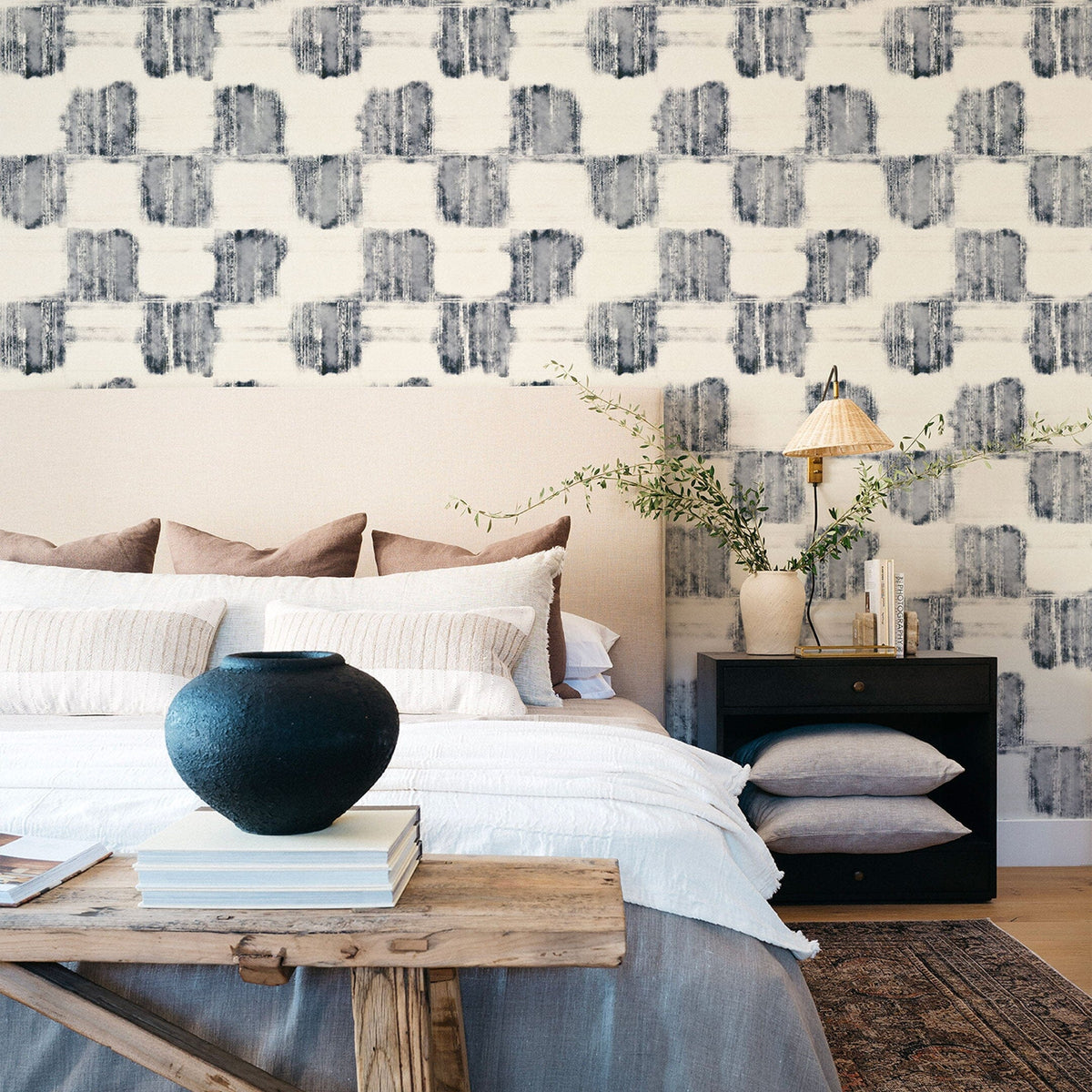
There’s nothing wrong with feeling blue. At least when we’re talking about your walls.
Blue is one of those colors that can completely change its personality depending on how you use it. A pale blue can make a bedroom feel soft and airy. Indigo florals can add just enough color to an otherwise neutral room. A deep blue wallpaper can turn a small powder room into one of the most interesting spaces in the house.
And despite what you may have heard, decorating with blue doesn’t mean your home has to look coastal.
Blue wall decor can work with everything from traditional and cottage-inspired rooms to modern, playful and moody interiors. The key is choosing the right shade, deciding how much blue you want, and pairing it with colors and materials that balance the space.
Here’s how to choose the right blue and use blue wallpaper, wall decals and murals throughout your home.
If you already know blue is your color, you can also browse our Blue Wall Decor Collection to see blue wallpaper, wall decals and murals together in one place.

Why Does Blue Work So Well in Interior Design?
Blue is incredibly versatile.
Blue can function as either a subtle backdrop or a statement color depending on its shade, saturation and how much of it you use. Pale and muted blues tend to feel softer, while indigo, navy and more saturated blues create stronger contrast and visual impact.
But the color itself is only part of the equation.
The same blue wallpaper can look completely different depending on the room’s natural light, flooring, furniture, textiles, wood tones and surrounding colors.
That’s why we recommend looking at the entire room rather than choosing a shade of blue in isolation.
How to Choose the Right Shade of Blue
Before choosing wallpaper, a mural or wall decals, think about how you want the room to feel.
Light Blue
Light blue is a beautiful option when you want color without a lot of visual weight.
It works especially well in nurseries, bedrooms and bathrooms where you may want the room to feel light and fresh.
Pair pale blue with warm white, cream and natural wood to add warmth.
Slate and Gray-Blue
If brighter blues aren’t your thing, look for shades with a little gray mixed in.
Slate and gray-blue feel more muted and can be easier to incorporate into spaces with warm wood, linen, cream, camel and brown.
They’re a great middle ground if you want to move beyond neutrals without introducing a really strong color.
Indigo
Indigo brings more depth to a room without necessarily going as dark as navy.
Our Water & Ink Floral Wall Decals in Indigo, for example, introduce rich blue through individual watercolor flowers while still allowing the original wall color to show between the blooms.
It’s a good option when you want blue to be noticeable without covering the entire wall.
Navy and Deep Blue
If you want drama, go deeper.
Navy and other dark blues can create beautiful contrast, especially when paired with cream, warm wood, brass, camel and chocolate brown.
And you certainly don’t have to use dark blue throughout an entire room.
One wall can be enough.
Blue-Green and Turquoise
Blue doesn’t have to be serious.
Turquoise and blue-green tones can bring more energy into kids’ rooms, bathrooms, playrooms and colorful interiors.
Pair them with quieter neutrals if you want the blue to stand out, or layer them with other colors for a more playful look.

What Colors Go With Blue?
This is one of the biggest questions people have when they start decorating with blue.
Fortunately, blue works with a lot more than white.
For a soft, classic look, pair blue with warm white or cream.
For warmth, bring in natural wood, camel, tan or chocolate brown.
For something more playful, try soft pink or muted green.
For contrast, black can make blue feel more graphic and modern.
And if you want to warm everything up a little, brass and gold-toned finishes can be beautiful against blue.
If your blue room is feeling colder than you expected, the answer isn’t necessarily less blue.
Often, it just needs more warmth around it.
Natural wood, woven textures, cream upholstery, warm metals, brown tones and soft lighting can completely change how the blue feels in the room.

5 Ways to Decorate With Blue Walls
You don’t have to paint an entire room blue to make blue an important part of the design.
Wallpaper, wall decals and murals each create a different effect.
1. Create a Blue Wallpaper Feature Wall
If you love pattern, blue wallpaper can turn one wall into the focal point of the room.
A feature wall works particularly well behind a bed, bathroom vanity, dining area, desk or nursery furniture.
The scale of the pattern matters too.
A smaller repeating pattern can feel quieter, while an oversized floral, stripe or geometric design will make the blue more prominent.
And remember, you don’t necessarily need to wallpaper the whole room.
Sometimes one wall is exactly enough.
2. Add Blue Wall Decals
Wall decals are a great option if you want blue on your walls without continuous coverage.
Because the designs are individually placed, you control how much of the original wall remains visible.
For example, Water & Ink Floral Wall Decals in Indigo can be grouped together for a concentrated floral statement or spaced farther apart for a softer look.
Blue wall decals can also be designed around the room itself. Arrange them above a bed, around a crib, behind a dresser or across an empty wall rather than trying to make the furniture fit around the wall design.
3. Make Blue the Artwork With a Wall Mural
If wallpaper brings pattern and decals bring flexibility, a wall mural brings scale.
A blue wall mural can essentially become the artwork for an entire room.
Instead of filling the wall with artwork afterward, let the mural be the focal point and keep the surrounding decor quieter.
This works particularly well behind a bed, sofa, dining table, desk or nursery furniture.
If the mural makes a strong statement, give it some breathing room. It doesn’t need a dozen other things competing for attention.
4. Try Blue in a Smaller Room
Bathrooms, powder rooms, reading nooks, entries and home offices can be great places to experiment with stronger color or pattern.
A small room doesn’t automatically require a tiny pattern or pale color.
In fact, a bolder blue wallpaper can turn a small powder room into one of the most memorable rooms in the house.
Small doesn’t always have to mean subtle.
5. Use Blue as an Accent
Maybe you love blue, but you don’t want a blue room.
You don’t need one.
Use blue as an accent through a smaller group of wall decals, a feature wall, a mural or one wallpapered area.
Then repeat the color once or twice elsewhere in the room through a pillow, rug, piece of furniture or accessory.
That little bit of repetition helps the blue feel intentional without letting it take over.

Blue Wall Decor Ideas by Room
One of the reasons blue is so easy to decorate with is that it can take on a completely different personality from one room to the next.
Blue Bedroom Ideas
In bedrooms, balance blue with warmer materials.
Try blue wallpaper or a mural behind the bed, then layer in cream bedding, natural wood, linen, chocolate brown and warm lighting.
For something lighter, use blue wall decals instead of covering the entire wall.
Blue Nursery Ideas
A nursery doesn’t need to be pastel from floor to ceiling.
Muted blue can create a beautiful backdrop when paired with natural wood furniture, warm white, cream and soft textiles.
Wall decals are especially useful if you want to bring blue into the room while still leaving plenty of open wall space.
Blue Bathroom Ideas
Bathrooms are one of our favorite places to have a little more fun with pattern.
If the tile, vanity and fixtures are relatively simple, blue wallpaper can introduce color and personality without requiring a major renovation.
Always follow the surface and installation recommendations for the particular wallpaper material you choose.
Blue Home Office Ideas
Blue can work as either the backdrop or the statement in a home office.
For a quieter space, choose a muted pattern behind the desk.
If the rest of the office is relatively simple, a stronger wallpaper or mural can become the main design element.
Blue Living Room Ideas
In a living room, think about how your blue wall treatment will interact with the largest pieces of furniture.
Cream, camel, brown, gray and natural wood can all pair beautifully with blue.
If your furniture and textiles already have a lot of pattern or color, choose a quieter blue wall treatment.
If the furniture is simple, you have more room to play with the walls.

Blue Wallpaper vs. Blue Wall Decals vs. Blue Murals
Not sure which one is right for your room?
Think about what you want the wall to do.
Choose blue wallpaper when you want repeating pattern and continuous coverage. Wallpaper works particularly well when you want the wall itself to feel patterned and layered.
Choose blue wall decals when you want more control over placement and negative space. Individual designs allow you to customize the arrangement around your room and furniture.
Choose a blue wall mural when you want one large-scale design to become the focal point. Murals tend to create the strongest single visual statement.
There isn’t one universally better option.
The right choice depends on your room, the amount of coverage you want and how prominent you want the blue to feel.
How Do You Keep a Blue Room From Feeling Cold?
If you love your blue walls but the room feels cooler than you imagined, look at everything surrounding them before changing the walls.
Warm wood furniture can make a big difference. So can cream instead of stark white, woven baskets, natural fibers, camel or cognac accents, chocolate brown, brass and warm lighting.
A blue wall surrounded by cool gray furniture and bright white finishes will feel very different from that exact same blue surrounded by walnut, linen, cream and warm metal.
Sometimes the blue isn’t the problem.
It just needs warmer friends.
Should You Order a Sample Before Choosing Blue Wallpaper?
Yes.
Blue is a particularly good example of why samples matter.
The color you see on a computer or phone screen can look different once it’s on your actual wall. Natural and artificial light can change it even further.
Before committing to a full wall, look at your sample in the morning, afternoon and evening. Check it with your room lights on at night too.
And don't look at the sample by itself.
Hold it near the flooring, furniture, bedding and textiles that are staying in the room.
You’re not choosing blue for an empty white screen.
You’re choosing it for your home.

Frequently Asked Questions About Decorating With Blue
What colors go best with blue walls?
Blue pairs beautifully with warm white, cream, natural wood, camel, tan, chocolate brown, soft pink, muted green, black and warm metallic finishes such as brass. The best combination depends on the particular shade of blue and the look you want to create.
Does blue wallpaper make a room look smaller?
Not necessarily. The effect depends on the shade of blue, scale and contrast of the pattern, natural light and surrounding finishes. Darker or highly patterned wallpaper can make a room feel more intimate, while lighter blue and lower-contrast designs can feel softer and more open.
How do you make a blue room feel warmer?
Pair blue with warmer colors and materials such as natural wood, cream, camel, chocolate brown, woven textures, brass and warm lighting. These elements can balance cooler blue tones without requiring you to change the walls.
Is blue a good color for a bedroom?
Blue can work beautifully in a bedroom in shades ranging from pale blue to deep navy. Consider the amount of natural light in the room and use warmer furniture, bedding and textiles if you want to balance cooler blue tones.
Can you mix different shades of blue in one room?
Yes. Mixing shades of blue can create depth and make a room feel more layered. Try varying the intensity of the blues while repeating one or two tones elsewhere in the room to make the palette feel intentional.
What’s the difference between blue wallpaper, wall decals and a mural?
Wallpaper provides continuous pattern and coverage. Wall decals are individually placed, giving you more control over the arrangement and amount of open wall space. A wall mural creates one larger-scale design and is typically used as a focal point.
Should I order a blue wallpaper sample before buying?
Yes. A sample lets you see the actual color, pattern scale and material in your room. Check it under both natural and artificial light and next to the furniture and finishes that will remain in the space.

Find the Blue That Works for Your Space
Blue can be quiet. It can be bold. It can feel playful, traditional, moody, modern or completely unexpected.
That’s what makes it so fun to decorate with.
The trick isn’t finding the "perfect blue." It’s finding the blue that works with your room, your lighting, your furniture and the feeling you want your home to have.
Start by deciding how much blue you want.
A few wall decals can introduce just a touch of color. Wallpaper can bring pattern across an entire wall. A mural can turn blue into the focal point of the room.
Then look at the colors and materials already in your space and choose the blue that works with them, rather than against them.
And if you want to see all of our blue designs together, shop the Blue Wall Decor Collection to explore blue wallpaper, wall decals and murals in one place.
Feeling blue can be a very good thing.


