

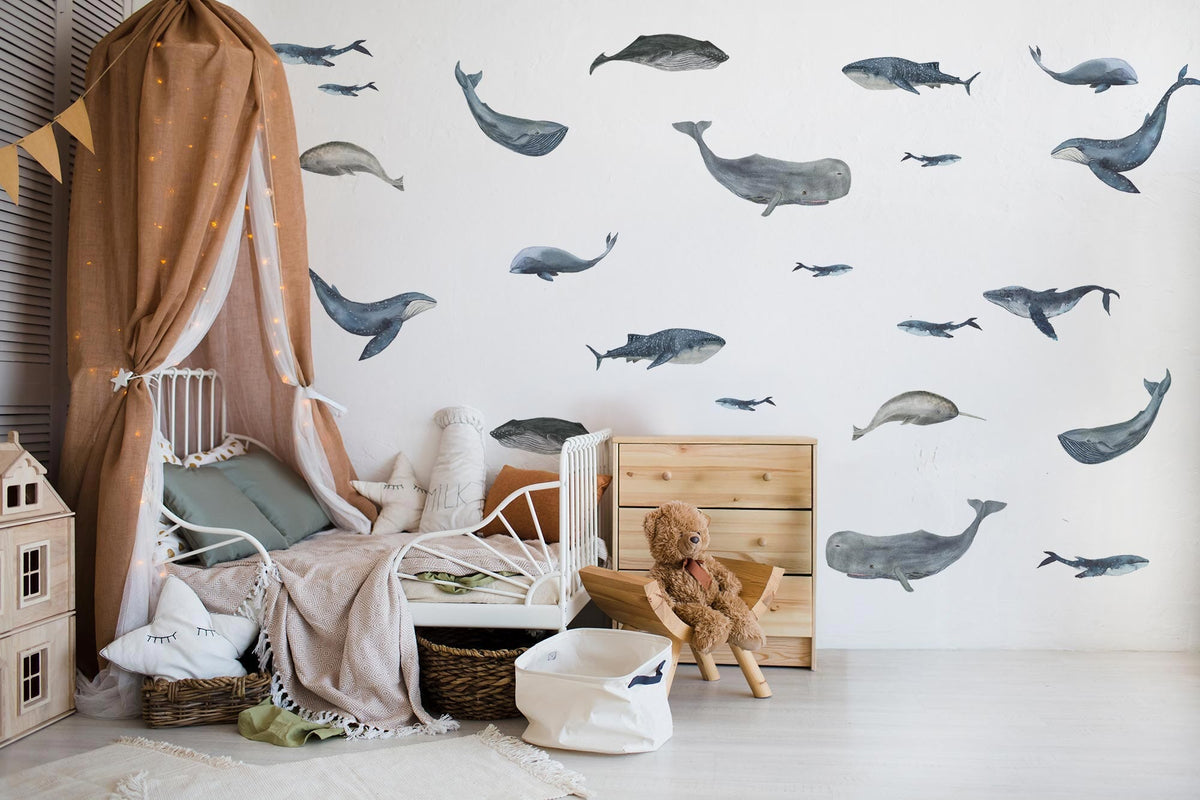

There is something magical about an under-the-sea room.
Whales floating above a crib. Sharks swimming behind a bed. Soft blue and grey watercolour details turning a blank wall into an underwater world. And here's the best part: you don't have to turn the entire room into an ocean-themed extravaganza to make it feel special.
Ocean wall decals let you create an underwater nursery, bedroom or playroom by arranging individual sea creatures directly on the wall. Because you control the placement, you can create anything from a small grouping above a dresser to an immersive under-the-sea feature wall.
Start with furniture and larger pieces you already love. Then let the walls tell the story. Here's how to create an ocean-themed kids' room that feels imaginative, beautiful and easy to update as your child grows.
Why Ocean-Themed Rooms Work So Well for Kids
An ocean theme can change dramatically depending on how you style it.
In a nursery, soft blues, warm neutrals, natural wood and watercolour whales can create a peaceful, dreamy space. For a toddler or older child, sharks, larger whales and a fuller underwater scene can make the exact same theme feel adventurous.
That's one reason we love using removable wall decals for children's rooms. The room doesn't need whale bedding, shark lamps, ocean curtains and nautical furniture to communicate the theme. Keep the foundation simple and let the wall decor bring in the imagination.

Whale Wall Decals for an Ocean Nursery
Whales are a beautiful starting point if you want an ocean-themed room that still feels calm.
Our Whale Wall Decals feature five different whale species in soft blue watercolour tones. Because each whale is individually cut, you create the arrangement yourself rather than installing one predetermined scene.
Try arranging them:
- Above a crib
- Behind a child's bed
- Across one feature wall
- Around a reading nook
- Above a dresser or changing table
- Across multiple walls for a fuller underwater effect
For a bigger statement, Big Whale Wall Decals use larger whales to create more visual impact.
Design Tip
Don't place every whale at exactly the same height or distance apart. Vary the direction, height and spacing slightly. The result feels more like a pod moving through the ocean and less like a repeating pattern.

Shark Wall Decals for an Adventurous Kids' Room
Some kids want peaceful whales. Others want sharks. If you're decorating for the latter, embrace it.
Big Shark Wall Decals work particularly well when you want one strong focal point. Start with the largest shark near a bed, dresser or play area, then use the smaller sharks and underwater elements to build the scene around it.
For a fuller wall, Little Sharks Wall Decals give you more individual elements to distribute throughout the space.
Shark wall decals can work in:
- Toddler bedrooms
- Big-kid bedrooms
- Playrooms
- Reading corners
- Ocean-themed bathrooms
- Under-the-sea feature walls
And despite the subject matter, a shark room doesn't have to feel dark or aggressive. Watercolour artwork, soft wall colours and simple furnishings can keep the overall space playful.
Can You Mix Whale and Shark Wall Decals?
Absolutely. In fact, mixing sea creatures can make an underwater wall feel more natural. The trick is to treat the entire wall as one composition instead of installing one product on one side and another product on the other. Start with the largest whale or shark as your visual anchor. Then use smaller animals to carry the eye across the wall. Vary their direction and height, and leave some open wall between groups.
When combining different ocean wall decals, repeating the same colours, illustration style and spacing helps separate designs feel like one underwater scene.
That's also why our watercolour whales and sharks work particularly well together.

How to Create an Under-the-Sea Feature Wall
You don't need to decorate every wall in the room. One thoughtfully designed ocean feature wall can completely establish the theme.
Above a Crib
Keep the arrangement softer and more open. Use whales and smaller ocean elements with plenty of negative space around them. This creates visual interest without making the nursery feel busy.
Behind a Kids' Bed
You can go a little bigger here. Start with one of your largest sea creatures, then work outward with smaller whales, sharks or underwater details.
Around a Reading Nook
A chair, bookshelf or pile of floor cushions can become its own little underwater world. Concentrating decals in one corner can make even a small room feel special.
Across a Playroom Wall
This is where you can really have fun. Use a larger wall to create movement from one side to the other. Mix sizes and vary the height of your sea creatures to make the scene feel immersive
How to Arrange Ocean Wall Decals
The difference between a few decals stuck to a wall and a beautifully designed underwater scene often comes down to the layout.
Here's the approach we use.
1. Anchor the Scene
Start with your largest whale or shark. Think of this as the focal point of the wall. Position it in relation to the furniture rather than automatically centering it on the wall. A large whale floating slightly off-centre above a bed can feel much more natural than one positioned perfectly in the middle.
2. Add Smaller Sea Creatures
Once the largest element is in place, begin building outward. Use smaller whales or sharks to lead the eye through the scene. Avoid grouping every large animal together and every small animal together. Mixing the sizes creates depth.
3. Create Movement
Imagine how the animals might actually move through water. Angle some upward, some downward and some horizontally. They don't all need to swim in exactly the same direction. A little variation makes the wall feel alive.
4. Leave Breathing Room
This one is important. You do not have to fill every blank area. Negative space gives the larger designs room to stand out and helps an ocean-themed nursery feel peaceful rather than cluttered. Start with fewer decals than you think you need. You can always add more.
5. Work With the Room
Beds, cribs, windows, dressers and bookshelves don't have to interrupt your design. Use them as part of it. Let whales appear to swim above the bed. Create a school of sharks around a reading corner. Allow the scene to continue toward a window rather than stopping abruptly beside it.
The goal is to make the wall decor feel like it belongs in the room.
Ocean Nursery Colour Ideas
An under-the-sea nursery doesn't automatically require blue walls. In fact, keeping the wall colour relatively neutral can make watercolour ocean decals stand out even more.
Consider pairing ocean wall decor with:
- Warm white
- Cream
- Sand
- Soft grey
- Pale blue
- Muted green
- Natural wood tones
Then bring in texture with woven baskets, linen bedding, wood furniture or a soft rug. This creates an ocean-inspired room without making every element in the space nautical.

Ocean Nursery vs. Big-Kid Ocean Bedroom
One of the nice things about an ocean theme is how easily it can evolve.
For an Ocean Nursery
Keep things softer. Use fewer decals, more negative space and a quiet colour palette. Whales work particularly well because they add scale and personality without making the room feel overly busy.
For a Toddler's Room
Start adding more storytelling. Create a larger underwater scene and position animals where your child can see and interact with the design.
For an Older Child
Let them get involved. They may want sharks instead of whales, a fuller feature wall or a mix of different sea creatures. Keeping the furniture relatively timeless means the walls can change without requiring you to redesign the entire room.
Wall Decals vs. Ocean Wallpaper
Both can create a beautiful underwater room, but they serve different purposes.
Ocean wall decals are a great choice if you want:
- Control over the layout
- Space between the designs
- An arrangement customized to your room
- A smaller ocean-themed accent
- An easier way to update the room later
- Flexibility around furniture and windows
Wallpaper may be a better choice if you want:
- A continuous pattern
- Full wall coverage
- A more immersive design
- A traditional wallpaper appearance
You can also combine the two.
Wallpaper can establish the background on one feature wall while coordinating decals bring smaller ocean elements into other areas of the room.
What About Textured Walls?
Having textured walls doesn't necessarily mean you have to give up on the idea of wall decals. Urbanwalls offers select wall decal designs in a Textured Wall material specifically designed for textured surfaces, in addition to our standard material for smooth walls.
If you have orange peel, knockdown or another bumpy wall finish, check the material options on the individual product page rather than ordering the standard Smooth Wall material.
If you're unsure about your wall, start with a sample. Testing the material on your actual surface is the best way to see how it adheres before committing to the complete design.

How to Install Ocean Wall Decals
Before peeling anything, plan your layout. Use painter's tape to temporarily position your larger whales or sharks on the wall.
Then step back.
Look at the arrangement from the doorway and from across the room. It's much easier to move something three inches to the left while it's held up with painter's tape than after you've installed it. Once you're happy with the overall composition, follow the installation instructions included with your particular wall decals. Start with your larger elements and gradually fill in the smaller details. And don't rush.
Creating the layout is part of the fun.
Frequently Asked Questions About Ocean Wall Decals
How do you decorate an under-the-sea nursery?
Start with a simple colour palette and timeless furniture, then use ocean wall decals to introduce the theme. Whales, sharks and other underwater elements can be arranged above a crib, behind furniture or across a feature wall. Leaving negative space helps keep a nursery feeling calm.
How should I arrange whale wall decals?
Start with your largest whale and build the arrangement around it. Vary the height, direction and spacing of the other whales to create movement rather than placing them in a straight line.
Can whale and shark wall decals be used together?
Yes. Combining whales and sharks can create a fuller underwater scene. Designs work particularly well together when they share similar colours and illustration styles.
Should I put ocean wall decals on one wall or throughout the room?
Either can work. A single feature wall creates a stronger focal point, while distributing smaller decals across multiple walls creates a more immersive effect. The best choice depends on the size of the room and how prominent you want the ocean theme to feel.
Are ocean wall decals good for a nursery?
Yes. Whale and other ocean-inspired decals can create a soft nursery when paired with neutral colours, natural materials and plenty of open space on the wall.
Do wall decals work on textured walls?
Standard wall decals are intended for smooth walls, but select Urbanwalls designs are also available in a Textured Wall material designed for bumpy surfaces. Check the individual product before ordering and consider testing a sample first.
Can ocean wall decals be removed?
Urbanwalls removable wall decals are designed to be removed when you're ready to change the room. The condition and preparation of the painted wall matter, so always follow the installation and removal instructions for your particular product.
Create Their Own Little Underwater World
The best kids' rooms leave some room for imagination. Maybe the whales are swimming toward a secret island. Maybe the sharks are exploring an underwater cave. Maybe tomorrow your child will invent an entirely different story. That's part of what makes decorating their room so much fun.
You don't need ocean-themed everything to create a space that transports them under the sea. Start with a beautiful foundation. Add whales, sharks and underwater details to the walls. Then let their imagination fill in the rest.
Explore our Aquatic Animal Wall Decals and create an underwater world that's completely their own.


